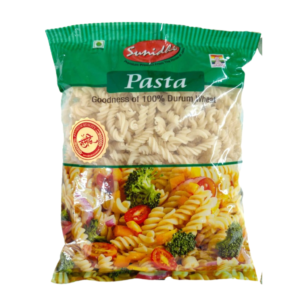
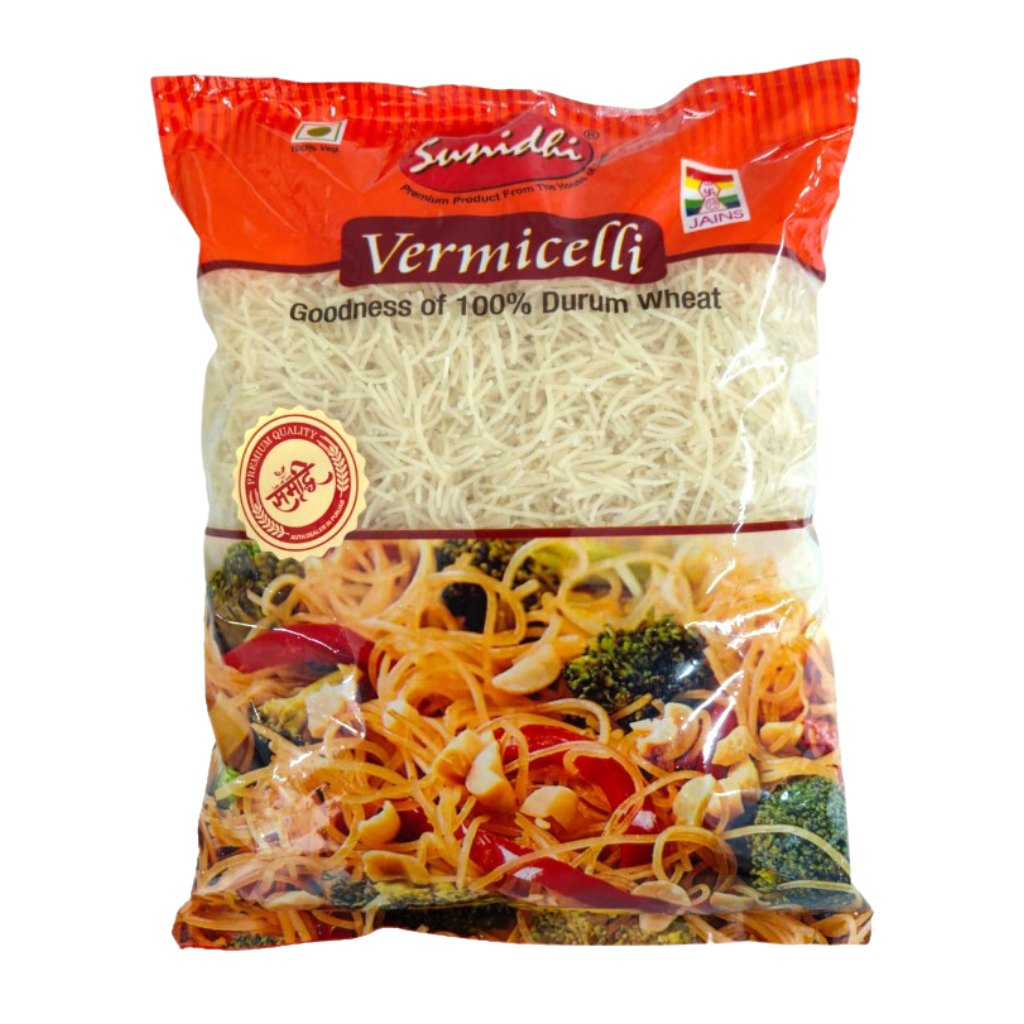
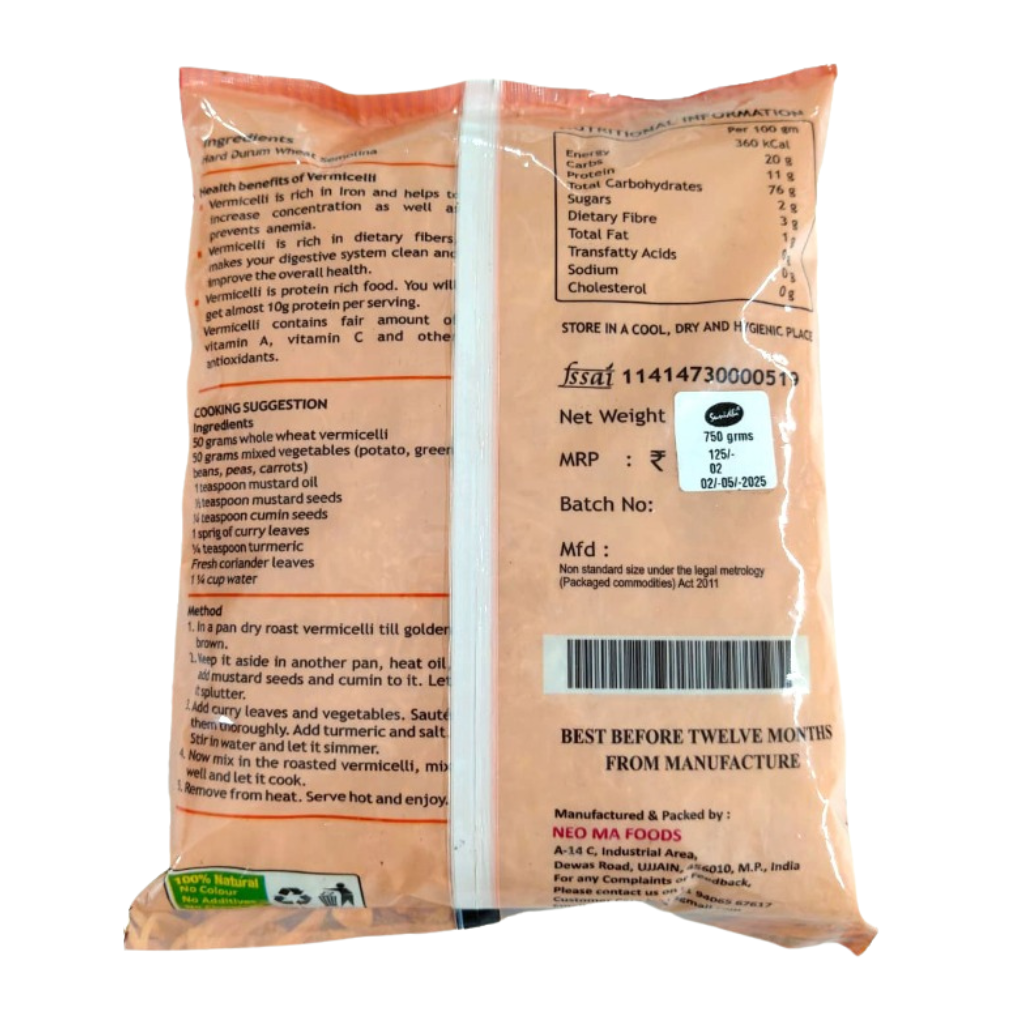
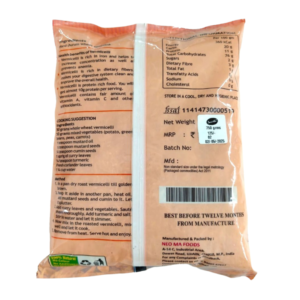
Vermicelli (Durum Wheat)- 750 Gms
₹150.00 Original price was: ₹150.00.₹110.00Current price is: ₹110.00.
Durum wheat vermicelli is a type of pasta characterized by its incredibly thin, rod-like shape. Unlike common pasta made from “soft” bread wheat, this variety is crafted from Semolina, which is coarsely ground durum wheat.
Key Characteristics
-
Texture: Due to the high protein and gluten content of durum wheat, the vermicelli maintains a firm, texture and does not easily become mushy when cooked.
-
Appearance: It typically has a golden-yellow hue, a natural byproduct of the carotenoid pigments found in durum grain.
-
Nutritional Profile: It is generally higher in protein and B vitamins compared to standard white pasta or rice-based vermicelli.
Culinary Uses
Because of its delicate size, it cooks extremely fast—usually in just 3 to 5 minutes. It is a global pantry staple used in various ways:
-
Italian Cuisine: Often served with light oil-based sauces, seafood, or broken into soups (pastina).
-
Middle Eastern & Indian Cuisine: Frequently toasted in butter or oil before being boiled. It is the star ingredient in Sheer Khurma (a sweet milk pudding) and Vermicelli Upma (a savory breakfast dish).
-
Pilafs: Often browned and mixed with rice to add texture and flavor (as seen in Lebanese rice).
Pro Tip: If you are using it for a stir-fry or salad, rinse it under cold water immediately after draining to stop the cooking process and prevent the strands from sticking together.
| Packaging | 700 Gms |
|---|